


 Today, the most remarkable thing happened. A client sent me an idea for a non-fiction book. I liked it, but had that same old sinking feeling that it wasn’t “big” enough. What does that even mean. We know what it means when we are talking penis size, portfolio size, your number of Twitter followers, and yes I’m looking at you Ashton Kutcher who apparently has all three. But what the fuck does it mean to have a big book, to conceive of one, to put a proposal together that feels…big. Well, it can be idea driven (Tipping Point), story driven (Sea Biscuit), personality driven (Keith Richards). It can be new age driven (the Secret), it can be high concept (The Seven Habits of Highly Defective People). It can be real-estate driven (The Fuckin’ South Beach Diet.) Oh, canine-driven (Marly and Me). Goopy-driven (Morrie and Me). Or find a little known story set against an exciting moment in history (Devil in the White City). Or you can just be an exception to all that (Just Kids).
What happened today was that after a few exchanges, it turned out that there was a much “bigger” story in the backdrop. In fact, the more my client told me about it, the more I realized he was on to something that had never been done. The most important history books had completely left this out. If I were a miner, I would have thought: gold. It was also exciting to me because we made the discovery together. And in so doing, I was reminded why I love working with writers, how exciting it is to see an idea come alive, and to know that over the next months that idea will find its expression on the page, and if we are right and lucky, that a number of publishers will read it and be astonished, too, that they didn’t know about this story. And that it has reach, and power, and depth. And they will pay a lot for it because they think they can sell a lot. i.e. it has the potential to be a big motherfucking book.
Of course, some big books started small. What’s your favorite big book and small book? Wildly popular or a small gem?
Filed under: Uncategorized | 44 Comments »
 The Fall is always a time when projects are flying fast and furious around town. Publishers and editors are in a buying mood with the back to school snap in the air. Foreign publishers are criss-crossing Manhattan in search of a big book to bring back in their suitcase. Scouts are chasing down every lead so that their publishers are pre-Frankfurt ready. So how do you feel if you’re an agent without a big Fall book to sell? How do you think?
 Some writers want to work without thinking or caring about market concerns. I get that. Some are hyper-aware of marketing concerns and want to reach a specific audience. I get that, too. There are some projects that have some kind of magnetic force field that draws the market out. You can often see it first inside the publishing house where interest pools around a book in the form of buzz, of galleys disappearing, of people wanting to work on it, a kind of momentum starts to build driven by in-house reads, rep enthusiasm, etc. Most books, however, need a push. And to that end, while you are writing, or when you’re shopping your project, and again when it is published, the clearer your idea is of your market, the more likely you might actually reach it.
 Dear All:
 I’ve often wondered what it’s like to be an actor and go out on auditions. Standing on a stage, a few deep breaths, a monologue. Someone calling out, “Thank you, next.” I’ve wondered what it’s like to be a dress shirt on a dry cleaning carousel. Or to be taller than everyone in the room, to have a cashier’s love for change, or to find a tiny monkey carved from a peach pit under the stage. Is this my imagination? Or the last thing I will ever write? No, sweet love, this is just a small child’s forehead waiting, in the dark, for a kiss goodnight.
 The reason for the lateness of this post: I was at a real live book party. Hosted by a big glossy magazine. Filled with people who used to be people, people who want to be people, and people who are someone (as in, isn’t that someone?). Waiters circulated with silver trays of risotto balls. It was the kind of party where you could reasonably expect to be dissed a few times. First, by someone who pretends not to recognize you. Then by someone who recognizes you but doesn’t say hello. By someone you used to work with. And finally by the waiter with the risotto balls.
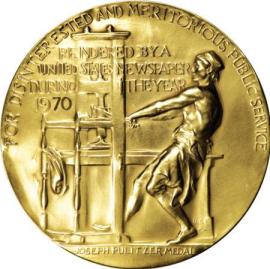 Let’s talk about a subject near and dear to my gall bladder. The way writers talk about their own work. Often they tell me that they think their work is good, quickly followed by a caveat, “but what do I know,” or ” but you’ll tell me.” Some will go out on a limb and tell me that they think they are better than Franzen or (insert the name of the author about whom you are most envious). Other writers tell you their work is crap, shit, etc., and you are meant to rush in like a wave and banish that thought. Though some, even highly decorated writers, do believe their work is crap, and it is a sign of mental illness. I love it when someone says they are not great, but they are good. And we are meant to understand that good, in this context, is somehow better than great, somehow more real, more honest. “I’m not saying I’m the best,” means “I’m the best.” “I don’t care if I win a Pulitzer” means “give me a god damn Pulitzer.”
 Tomorrow it begins. The parade of meetings that lead up to the Frankfurt book fair in October. Editors from all over the world come to New York in their hunt for new books. During these meetings, we schmooze about publishing, we find out what books are working in their countries, and we pitch our clients, hoping to find a British, German, Japanese, etc. sale. We have a rights guide that we’ve created with a description of the book, jacket, and author bio.
 I spent most of the weekend reading. Lots of clients delivered manuscripts they had been working on this summer. And some prospective clients have surfaced. I’ve been blown away by a few revisions. THere is nothing more impressive to me than a writer who isn’t afraid to junk some material in favor of a fresh start, or who can really crack open a piece instead of just moving the mashed potatoes around the plate. One of my great pet peeves has always been when a writer returns a manuscript a little too quickly, claiming a full revision, only to find a work that has been tweaked like a hem raised a quarter inch. But then, another writer will go away, burrow in a for a while, and eventually return with a revision that inspires you all over again, and produces in you that feeling that got you hooked on this work in the first place.


 Betsy Lerner