THE FOREST FOR THE TREES is about writing, publishing and what makes writers tick. This blog is dedicated to the self loathing that afflicts most writers. A community of like-minded malcontents gather here. I post less frequently now, but hopefully with as much vitriol. Please join in! Gluttons for punishment can scroll through the archives.

If I’ve learned one thing about writers, it’s this: we really are all alone. Thanks for reading. Love, Betsy
How old were you when you started to write. I literally kept diaries when I was eight years old called The Hot Dog Diaries. Fairly self-explanatory. Then I pretended to be Anne Frank as many good Jewish girls do, scribbling in a crawl space under our stairs. Sadly, our ranch house didn’t have an attic. Then, and here is the big turning point, I asked a beloved 7th grade teacher if I could learn creative writing. She told me to go home and write a poem. I had meant calligraphy, but didn’t know the word for it. Too embarrassed, I went home and wrote my first poem. The rest is mystery.
Metronorth. 7:33 to Manhattan A man calls a woman and says he has two things to tell her, not three, no four. First, he loves her. Second, contrary to what anyone tells her, he is going to take care of her. Third, she has to trust him, and fourth, it’s going to work out; does she believe him?
When the publisher is preparing to publish your book, they ask you to answer an “author’s questionnaire.” It has a zillion questions that all boil down to one: who do you know? Who can give you a blurb, who can promote you, who will have you to their bookstore, how many friends and followers do you have, do you have contacts in radio, television, print media. WHere have you been published? Do you have a lecture agent, a TED talk, a platform? Did you go to high school with Stephen Colbert? Smoke weed with Terry Gross? Are you a graduate of this, a member of that. Associations, institutions, clubs that would have you as a member. The more water you can bring to the horse the better. (And this also applies to getting an agent, too. It’s not that having contacts is more important than writing a good book, but showing an ability to get the word out really helps pave the way in a very bumpy marketplace.)
Spent hours on an editorial letter today. I knew what I wanted to say, but I couldn’t figure out how to say it. I got hung up thinking about the best way to make my case. I’ve never given notes to this particular writer and I wasn’t sure how open she would be to “suggestions.” Sometimes I think writing an editorial letter is like drafting closing arguments in which you roll out a series of facts that feed a particular narrative. Other times, it feels like a dance, tentative at first, then more assured. You both need to manage the writer and not manage the writer inso far as you have to be honest. You have to be willing to be the bad guy, the whistle blower, the fact checker, the naysayer. YOu have to say the emperor’s clothes are shabby and ill-fitting.
A writer called me today and asked for some advice. His own agent had stopped returning calls and emails. What should he do? I hate to say it but it’s a little like romantic relationships. When someone doesn’t return calls or emails, it’s time to move on. You want an explanation, you want closure, you want another chance, you want a little fucking respect. People usually don’t call back because the news isn’t good and they don’t know how to deliver it. They feel bad, awkward, and it starts to get easier to avoid than face the person. Look, there is no excuse. But it happens. And it happens a lot. If you’re a writer it’s the air you breathe. You submit your work to magazines and never hear back. You contact agents and never hear back. You finally get an editor and he takes ten months to read your book. You get your book published and no one reviews it. Your mother doesn’t read it. On and on. What do you do? How do you stay in the game?
A publisher told me some years ago that word of mouth was the most effective way to sell books, more than ads, discounts, reviews. People trust other people. I don’t have any data, but it feels true.
What was the last book someone recommended to you that you went out and bought.
People ask me what I’m working on next. It takes a few minutes to get my tap shoes on and start dancing. For some reason it always makes me feel defensive, like what’s it to you. Then guilty because I haven’t really started anything. Then ridiculous for hedging and waffling and acting like I can’t remove my thumb from my ass. What am I working on? Don’t I counsel all my writers to start a project right away? I forget how much air it takes to fill a balloon. Fans, flames, germs, seeds, a single image, a forgotten page. Something from nothing. Bring my roots rain.
Drum roll please! Here’s a New York Times Book Review for the Bridge Ladies. Before I read any review, I say a little prayer. Then I speed read. If it’s good, I feel I’ve dodged a bullet, slipped the noose. I read it again, slowly. Then, following relief, I wish it was longer, more enthusiastic, penned by Cynthia Ozick, with lots of crunchy pull quotes. Did they mention my gorgeous similes? Or how if you’re only going to read one book this year: this is it. Did the gates of heaven open? Did Idris Elba ask me out? Did Bette Midler call and say she has to play my mother? Reviews are mind fucks, full stop. But I’m grateful for this one. Don’t get me wrong. Love, Betsy
THE BRIDGE LADIES – NEW YORK TIMES BOOK REVIEW A Memoir
By Betsy Lerner
Lerner’s childhood memory of the women in her mother’s bridge club, “their hair frosted, their nylons shimmery, carrying patent leather pocketbooks with clasps as round as marbles,” conjures the magic mothers hold for little girls. But her grown-up relationship with her mother is messy and tense. Then Lerner, a middle-aged literary agent, seizes on a scheme for better understanding. She will tail her mother to her Monday afternoon bridge game, still running after more than 50 years.
At first, bridge bores Lerner. More than once, she’s tempted to check her phone. She had imagined she’d be encountering a senior division of the gossipy female-empowerment rituals she enjoys with friends her own age, but these bridge ladies are old school. She probes for revelations: When did they lose their virginity? How do they feel about aging, death? The ladies parry with a wall of propriety. Worse, the mother-daughter bond still grates. Clothing choices, housekeeping techniques — “every comment she made felt like a referendum on how I lived my life.” Tit for tat, she labels her mother the Duchess of Protocol for her meticulous makeup, her matching craft-fair jewelry sets, her restraint in the face of grief.
When Lerner resolves to join the game, she discovers that bridge is more complicated than it seemed. And so it is with the ladies. Slowly, through an accumulation of sharply observed details, they reveal themselves: How they followed the rules in life as in bridge. How they achieved their aspirations early, marrying proper Jewish men and raising their children. How they manage just fine now, thank you, on their own. Their stories are so similar that Lerner defines them more clearly as a group than as individuals, but she does come to respect them, and she and her mother edge closer to spiky affection.
Lerner’s memoir makes a case for spending time together under the rules of neutrality imposed by a game, an approach to living that refrains from over-sharing and outward complaint to concentrate on the task at hand. The bridge ladies are there for one another, even as they keep their feelings to themselves and play on.
Last night was a first. I was invited to a Book Club. Until now, I’ve been doing readings and events. This was more intimate. Up close and personal. Dinner. There were ten women. I knew a few from summer camp and high school — hadn’t seen them in more than thirty years. It was at a house on the Connecticut shore line, calm with the sun setting. The women were all about my age (the first thing they asked me was how hold I am). THey had all read the book. One woman’s book had post- its. I don’t think I’ve ever seen anything as touching in my life. The best part is that they are readers. Real readers. Always had books going. Every book mentioned, when they were deciding on their next, someone had already read. Music to my agent’s heart.
They wanted to know the usual things: what did my mother think of the book? What about the other ladies? My sisters? How did I get the idea? WHat was I working on next? ONe woman asked me what my father would have thought of the book. That was a first. I don’t think he would have liked it. My dad was from the school of stiff upper lip. They praised my ability to weave so many topics. SOme said they even wanted to try Bridge. They even invited me to join.
People ask me what I like about Bridge (usually with some disbelief). After all, how many former poet potheads think a good time is sitting around playing cards? Poker sure. But Bridge? Here’s my answer, aside from the fact that it’s a highly competitive and challenging game that involves both team work and individual skill. It’s the way Bridge pre-empts all other thought. When I play Bridge, all the noisy voices in my head (and in my head those voice are usually nasty) quiet. You need to concentrate so deeply when you play that you can’t think of anything else. Hours slip away. It’s intoxicating and absorbing, and it reminds me of only one other things: writing.



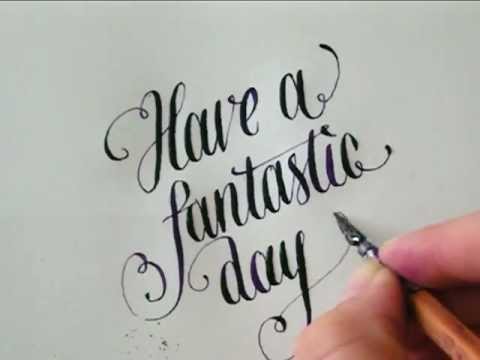 How old were you when you started to write. I literally kept diaries when I was eight years old called The Hot Dog Diaries. Fairly self-explanatory. Then I pretended to be Anne Frank as many good Jewish girls do, scribbling in a crawl space under our stairs. Sadly, our ranch house didn’t have an attic. Then, and here is the big turning point, I asked a beloved 7th grade teacher if I could learn creative writing. She told me to go home and write a poem. I had meant calligraphy, but didn’t know the word for it. Too embarrassed, I went home and wrote my first poem. The rest is mystery.


 A writer called me today and asked for some advice. His own agent had stopped returning calls and emails. What should he do? I hate to say it but it’s a little like romantic relationships. When someone doesn’t return calls or emails, it’s time to move on. You want an explanation, you want closure, you want another chance, you want a little fucking respect. People usually don’t call back because the news isn’t good and they don’t know how to deliver it. They feel bad, awkward, and it starts to get easier to avoid than face the person. Look, there is no excuse. But it happens. And it happens a lot. If you’re a writer it’s the air you breathe. You submit your work to magazines and never hear back. You contact agents and never hear back. You finally get an editor and he takes ten months to read your book. You get your book published and no one reviews it. Your mother doesn’t read it. On and on. What do you do? How do you stay in the game?




 Betsy Lerner