• Forest for the Trees
  • THE FOREST FOR THE TREES is about writing, publishing and what makes writers tick. This blog is dedicated to the self loathing that afflicts most writers. A community of like-minded malcontents gather here. I post less frequently now, but hopefully with as much vitriol. Please join in! Gluttons for punishment can scroll through the archives.

    If I’ve learned one thing about writers, it’s this: we really are all alone. Thanks for reading. Love, Betsy

And I can’t change Even if I tried Even if I wanted to And I can’t change Even if I tried Even if I wanted to My love My love My love

Novels are flying at my head. Thousands of pages flapping like seagulls at Brighton Beach. Stories from land locked countries, from the mouths of bats, from trains that never leave the station. From the station itself. How did you come up with so many sentences, so many girls named Cara or Carla or Quintana, or Ray. Did it start on a stair, a hill, a bucket, a pail? What’s it about? Well, that’s a good question. The beach, the mountains, a multi-generational tale of raisin bran. You are nothing like a summer’s day. Why do sympathetic characters bring out the sadist in me? Does anyone really change? Are you my beginning, my middle or my ass wipe? Hi, I’m Betsy and I’m addicted to prose. Oh, Daisy. Grow up. There is a big canister somewhere. Dear Betsy: I am writing to see if you would be interested in my five novels, a 874,000 word quintet about two slugs fucking in a snot can. Do you feel me? Oh mighty novelists with your big boots and musky armpits. Where would we be without you?

Where?

Could It Be That It Was All So Simple Then

Guys, guys, guys, guys. It’s Book Expo in New York. I just tripped over Scott Turow. I didn’t get invited to the Malcolm Gladwell party. I didn’t get invited to my own publisher’s party. That I take as a badge of pride. I ran into a book rep I haven’t seen since the Fifties, but he’s still wearing that bolo and I still remember Miami. I saw a machine that makes books on demand.  I saw a vampire in broad daylight. I saw my beloved Japanese agent and she was wearing a gorgeous floral skirt that she bought at thrift shop, then corrected herself: Vintage. I met with a mother-daughter team who sell audio books. When I told the daughter she looked like Kim Kardashian she seemed to be insulted. I wandered through the booths thinking about all the publishing jobs I had, all the bosses I didn’t blow, all the massive excitement I used to feel helping books come into the world and learning how to galvanize my passion.  Or how I could get high off the smell of books fresh out of the carton. Or the party I once threw for a first collection of stories, decorating my apartment with candles and peaches.

Were those the days?

Got Me Lookin So Crazy Right Now

This is for the French editor who came by the office this week and said she had started her day every morning reading my blog. Well, my blog and a Galoise. God, that’s a dreamy combo. She just started a new job after twenty years with one publisher. She has read everything and has a wonderful way of talking about writers and their books. More, she had a quiet confidence, clear about what she would publish and how. Honestly, it’s a such a pleasure working in publishing when you get to talk books with a sexy, French editor. Yes, my life is this train and these are the sub-titles:  Books float like rafts in a calm sea. Everything eats. This is the French cream you brought me, made from green tea. Do you have a light, my love?

Anybody out there?

I Saw The Movie and I Read The Book (reprise)

The New Yorker’s blog is asking famous writers what they will be reading this summer. Can you believe they forgot to ask me? What is David Remnick thinking? Okay, here’s what I’m thinking: Saul Bellow’s letters. I didn’t read Bellow until my mid-forties and I’m glad because it was a hell of a binge, and a hell of a revelation. My husband is almost finished with the letters, and has been reading out bits to me that he knows I’ll like. I can’t wait, and the book will already be broken in. I’m currently in the middle of Janet Malcolm’s The Silent Woman. I am going to read One Day by David Nicholls, see the movie and read the screenplay. I’m going to finish Savage Detectives and start Amulet by Roberto Bolano. I have a Dorothy Parker biography I want to read. And last and most heartbreaking, The Pale King by David Foster Wallace.

What’s on your summer list, bitches?

Blackbird Singing In The Dead of Night

Fourteen years ago, a slim memoir with a simple but perfect title came into the world and created a storm of media: praise and scorn. A sales rep at Random House had sent a copy to my husband with a handwritten note: Great art? Maybe. Provocative? Definitely. The book was The Kiss. The author Kathryn Harrison, a novelist with three books to her credit at that point, was being taken to task for, among other things, revisiting material from her fiction for this memoir, particularly her incestuous relationship with her father.

I turned away, but not because she was continuing to mine her life for her writing (a ridiculous charge on any level), but because I was insanely jealous. As a young editor working on memoirs, I envied the tidal wave of attention hers was getting. But even more, I was jealous as a writer. She had moved a boulder. She had found prose as stark and terrifying as the incident she was writing about. She found the words, and she hit a nerve. I couldn’t touch it.

Years later, I met Kathryn Harrison when we were both on a publishing  panel. I went home that night and found the copy the rep had sent. Interestingly, I had never sold it off over two moves; it still had the note. I think I read the memoir in one or two sittings. It was actually the mother daughter story that initially captivated me. I read it a second time, more slowly, how did she find the control and composure, how did she level her gaze, how did she pin each sentence down?

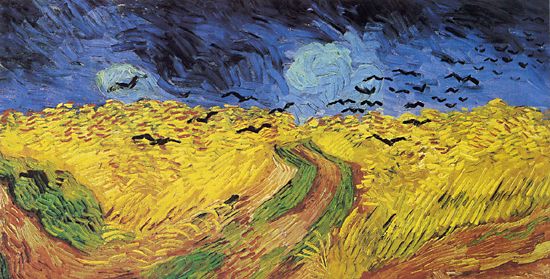
I received a reissue of The Kiss this week from the publisher. I thought I’d just read a few pages, but I reread the entire book having been captured by the earliest lines which brilliantly telegraph the entire story, “standing against a sheer face of red rock one thousand feet high; kneeling in a cave dwelling two thousand years old; watching as a million bats stream from the mouth of a Carlsbad Cavern into the purple dusk…” It’s all there like Goya’s Caprichos and Van Gogh’s blackbirds let loose over a tragic land. It’s also worth getting for the afterword by Jane Smiley and the Q&A with Kathryn Harrison if you’re interested in memoir or are writing one.

If you could ask Kathryn Harrison a question, what would it be?


What’s The Sense of Changing Horses In Midstream

In late May and early June of 1986, between grad school and my first day at Simon and Schuster, I rented an efficiency in Mt. Desert Island, Maine  for three weeks. I planned to write, clear my head, get over a break-up. After I got lost hiking for a few hours with only Madame Bovary and some yogurt covered raisins in my back pack, I called it quits. I was never very from the main road as it turned out, but I’m a big pussy with an overactive helter skelter imagination. I think it was day eleven.

My criteria for the books I took with me: books I had lied about reading. So in my cold little efficiency by the light of goose neck lamp, I read Madame Bovary, A Light in AUgust, and A Farewell to Arms before I bolted back to the city where I’ve always felt completely safe.

What books have you lied about reading or pretended to finish.

I Pick A Moon Dog

I like to watch people in bookstores. If I could, I would follow them around with a survey or a tape recorder. I want to know why they pick up the books they pick up. Did they go into the store knowing what they wanted? Had they read a review, heard the author on NPR, or had the book been recommended? Were they just looking around and a jacket or title jumped out? Were they familiar with the author? DId they read the jacket copy, the blurbs? Did any of that make a difference? Did they read the first page, the last? Did they smell the spine? Did the display make a difference? The jacket art?The author photo? I live to understand why people are attracted to books.

When I was a young editor, I worked for a publisher who would walk around the conference room while an editor was presenting a book. She would pick on people randomly and ask them if they would read the book being discussed and why. She wanted to know why they wouldn’t read it, too. She would really put people on the spot and it was more than a little terrifying. But what she’d tease out over the course of a meeting was what connected a reader to a book and sometimes, before our eyes, we saw a marketing campaign, an approach, a hook, a narrative come alive. And sometimes that idea would translate all the way through from writer to reader.

What do you do when you walk into a bookstore?

Andy Did You Hear About This One?

Constitutional Law Professor Kenji Yoshino offers a brilliant analysis of ten Shakespeare plays through the prism of justice, showing both the evolution of the law and its impact on contemporary issues of justice. David Orr‘s guide to modern poetry likens reading  poetry to visiting Belgium — not altogether unpleasant even if you don’t speak the language or know the customs. Hamilton Cain‘s lyrical evocation of a Southern Baptist childhood ultimately asks how our religions imprint on us, even when we lose our religion, especially when we face crisis. If you like sex and travel, pre-order Elisabeth Eaves Wanderlust, a memoir that covers five continents in 12 years as Eaves pursues an unfettered life. And for new and expecting parents, Morning Song is a must — a beautifully assembled collection of poems from Blake to Billy Collins by Susan Todd and Carol Purrington.

It’s an amazing feeling to get finished copies of a book you’ve sold,  a manuscript you’ve watched  develop for a year or more, the arrival of galleys, jackets, blurbs, all the phases of production, all the push and pull, the good cop, bad cop, the encouragement, prodding, listening, check chasing, etc. All that, like childbirth, falls away in the joy of holding that book. Of course, most authors think this is the end, but it’s just the beginning of the true torture known as a writer’s life. Clawing to get attention, the anxiety of bad press, no press, lukewarm press. The passive aggressive comments from friends and family. The publication party and the false smile lacquered on your face as deep down you feel like a fraud, and haunting bookstores and not being able to find your book and calling your agent, your voice high and strained because you don’t want to be needy or ungrateful, but god fucking damn it. So, to my darling brilliant writers with whom I have worked and worried beside, take a moment to hold that new baby (2.2 ounces), and for a brief moment feel really good because for the all the struggle, whatever happens or doesn’t, you are here, now.

I Have No Need For Friendship

Betsy: After posting a blog entry about my struggle to write the acknowledgments page for my debut story collection and wondering what might be construed as tacky or overkill, one of my (and your) faithful readers suggested I ask you. I bet you have some good stories about author acknowledgments — the good, the bad, the excessive, the embarrassing, the heartfelt, the beautiful. Any thoughts or stories you’d like to share? NAME WITHHELD

Dear Thanker:

I have one word for people who write acknowledgments: pussies. These aren’t the Academy Awards. I hate them. The best thing I ever did was have them deleted from the paperback edition of The Forest for the Trees. They were mortifying, and my acknowledgments in Food an Loathing make me want to vomit on myself. You are the one true genius of your work. Did anyone help you type? Are there acknowledgments on paintings? Did Mozart ever thank anyone?

Do I read them? I read them first. And why? Competitively. To see who the agent is, to see who the editor is, to see how big of a douche bag the author sounds like with the false gratitude, humility, and appreciation. Have you ever noticed how young writers sound like they’re signing someone’s yearbook in their acknowledgments? I’m not even going to comment on the thanking of parents, the people who fucked you up in the first place and made you run crying to a keyboard to get over yourself.

My back hurts. I’m sorry. What do you all make of the “I couldn’t do it without you” bullshit at the back of books?

Love, Betsy

P.S. Do I like to be thanked in books that I’ve worked on? Very much.Thank you.

I Ain’t No Monkey But I Know What I Like

Please be gentle!


When I go around hawking my book, I give a series of workshops and one is on titles. I don’t know if it will be possible to recreate some of that experience here or if anyone will be game, but if you would like to test out your title, leave it as a comment. What we do in the workshop is use everyone as market research. Writers float their titles and we get a show of hands who likes it, who doesn’t, why? And then a deeper conversation ensues about the importance of titles and why we like some, not others, how useful they are for marketing,  what they need to accomplish given the genre, how well they capture the essence of the book, how they can attract and galvanize, or get lost in the crowd.

What makes you pick up a book in the store? You have a title, jacket art, an author’s name, some descriptive copy. What grabs you? Some combination no doubt. But when you are pitching to agents (and agents in turn to publishers), it is even more critical to get the title right. I pitched a book today and the title and sub-title said it all. And when I pitched it, the editors said things like: that’s a brilliant title, that title gave me chills, I feel like I’m going to cry, etc. This is called a bulls-eye. It doesn’t guarantee a sale, but you’ve got the door open and editors will look at it more quickly.

I’ve heard too many writers say that the title is a place holder because they know it will change. Or they say they’re not good at thinking up titles. Or the title is good enough. I beg you to find a great title. A truly great title. You cannot underestimate how much it helps your cause.

So, if  you are working on your title and want some feedback (and please post anonymously if you like), show us what you got. And we’ll tell you if we like it and why, or send you back to the drawing board. Or just tell us  what some of your favorite titles are and why. I will send a FREE AUTOGRAPHED copy of The Forest for the Trees (Revised and Updated for the 21st Century) to the best loved title submitted. No joke.