• Forest for the Trees
  • THE FOREST FOR THE TREES is about writing, publishing and what makes writers tick. This blog is dedicated to the self loathing that afflicts most writers. A community of like-minded malcontents gather here. I post less frequently now, but hopefully with as much vitriol. Please join in! Gluttons for punishment can scroll through the archives.

    If I’ve learned one thing about writers, it’s this: we really are all alone. Thanks for reading. Love, Betsy

Don’t Go Breakin’ My Heart

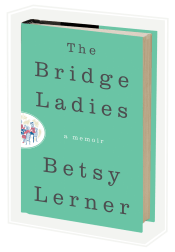
Bridge 3D

TOP TEN THINGS NOT TO DO ON THE NIGHT BEFORE PUB DATE:

  1. Do not tweeze eyebrows
  2. Do not go off meds
  3. Do not start new writing project
  4. Do not weigh yourself
  5. Do not do a mock interview with Terry Gross
  6. T.J. Maxx
  7. Do not read your book.
  8. Step away from the fridge
  9. Do not drunk dial your agent
  10. Put the tweezers down. Now.


They Say as a Child I Appeared a Little Bit Wild

psych-couch

Thrilled to get this piece in THE GUARDIAN. Especially this headline.. LOL

I MOVED NEAR MY MOTHER AND IT SENT ME INTO THERAPY
Joanna Morehead
Saturday 30 April 2016 01.15 E
‘So, I see you bought the low-fat cottage cheese rather than the fat-free,” said Betsy Lerner’s mother, Roz. A chance remark? An aside? An observation? Oh, gentle reader! You either get it or you don’t. This conversation wasn’t about cheese. It wasn’t about calories or flavour or the small print on product packaging. It was about everything that ever happened between Betsy and her mother. It was a hand grenade. No, it was an atom bomb. It was world war three. Because here, according to Betsy, is the translation: are you ever going to be good enough?

That question had been at the heart of Betsy’s relationship with her mother for as long as she could remember. It is at the heart of many mother-daughter relationships. Perhaps it’s especially central to those relationships where the mother is today in her 70s, 80s or 90s and the daughter in her 40, 50s or 60s. Betsy and I are of that daughter generation – both in our early 50s, with mothers in their 70s (mine) and 80s (hers). What’s significant for us, and for our generation, is that our mothers – on the whole – did not do paid work. They belonged to the last cohort of at-home mothers; we were the first who combined raising children with earning money.

Every generation reinvents itself; every generation changes the world – but this was a revolution. It was a cliff edge and when we jumped off it, hoping our parachutes would open, we looked up to see our mothers peering down at us and shaking their heads. They didn’t think we could make this leap because mothering had taken up all of them. How could we possibly give enough to the next generation, if we were working as well?

Yet it was the arrival of that next generation that bump-started many women of our generation into re-examining this most complicated and angst-ridden of all our relationships – the one with our mother. For Betsy, the arrival of her daughter 19 years ago was a marked moment in the journey she documents in her memoir The Bridge Ladies, about her relationship with her mother. “When my mother saw my daughter for the first time, I could see she was truly happy. And there was this angry person inside me thinking, why do I have to have a baby for you to be happy with me?”

But at the same time, says Betsy, “I also felt that she was not wrong.”
The top 10 stories of mothers and daughters
Read more
For a long time – maybe always – Betsy’s relationship with her mum had been a battleground. “I used to say that if we went shopping together, the changing room would end up blood-splattered.” When Roz came to her house, Betsy would be “walking towards the front door” and would “see the top of her head, her frizzy hair, through the glass, and think, oh fuck. What is she going to criticise about me today?”

For many years, Betsy did what many women of our generation do to contain their difference with their mothers. She kept Roz at arm’s length: she made weekly, dutiful phone calls, and attempted to stay clear of war zones (such as the fat content of the cottage cheese). But then everything changed: Betsy’s husband got a new job that took them to live back in the part of Connecticut where she was raised and where Roz still lived. “When we moved there, I had to go back into therapy,” Betsy remembers. “I was radioactive around my mother.”

Then something else happened. Roz had an operation and Betsy went to stay with her while she recuperated. Through those days there came to the front door a procession of well-turned-out, silver-haired ladies, each asking how Roz was getting on, and each bearing a casserole or pot supper. These were Roz’s oldest friends, her bridge group: five women who had met each Monday for five decades to play bridge. As a child, Betsy had found them fascinatingly chic; as a teenager, she thought them hopelessly square. As an adult, working hard to carve out her career as a literary agent in New York, they seemed like relics of another age, a time in which ladies had nothing to do but lunch and spend the afternoon snapping down cards around a table.

I asked if I could come to their lunches and bridge games and interview them about their lives
And yet, says Betsy, “The thing I couldn’t help thinking was, who would do this for me when I’m old? I’d be getting a few text messages saying hope you’re better soon … social media is never going to deliver a pot roast.”

It made her think more deeply about Rhoda, Bea, Jackie and Bette who, with Roz, made up the bridge ladies. “I’d always thought there was a good story there – their friendships, their lives, their relationship across 50 years,” Betsy says. “So I thought I’d find out more: I asked if I could come to their lunches and their bridge games and interview them about their lives.”

That was three years ago. And so began a phase of Betsy’s life when, to her surprise, she found herself entering into the world of Roz and the bridge ladies, watching how they interacted, and talking to them about their lives. To some extent, all their stories were Roz’s story, and Betsy interviewed her, too. “They were a very homogenous group. They’d all married men who had wealth or potential, no one moved or got divorced or reinvented themselves.” Much of the connection between them was understood, rather than explored or raked over. One of Betsy’s sisters, Barbara, had died as a young child. “Her death was never once mentioned at that bridge table, even though they all knew, every one of them; and they have all had their sorrows. We, our generation, we think they talk too little. They think we talk too much.”

Betsy Lerner on her wedding day with her mother, Roz.
Facebook Twitter Pinterest
Betsy Lerner on her wedding day with her mother, Roz.
As she spent time with Roz and her friends, even learning to play bridge, Betsy realised what she was really hoping for was a better understanding of, and a more meaningful relationship with, her mother. What she also came to understand was that age-old truth so many of us fight against, but all have to eventually accept: we cannot change others – only ourselves. “All my adult life, shrinks have said to me, she’s not going to change. And I used to think: you’re so wrong. But today I know that’s true: we have to change if we want that relationship.”

Is it that simple? If we want to cultivate a better relationship with our mother, we must enter – and truly understand – her world? When you boil Betsy’s book down, that’s about it. But don’t mistake simplicity for ease. You have to be in a certain place yourself, as a daughter, she feels, to be able to do it. “I couldn’t have done this if I hadn’t felt secure in myself.”

Getting to understand the real Roz was a painful, humbling experience for Betsy. “In the past I’d dismissed her. I’d been really mean to her. I felt she was phoney, unreal. I thought she cared only about the status quo, and about how I looked.”

But underneath Roz’s veneer there lurked a sensitive, caring spirit that understood what matters most – even if it wasn’t what she shared easily.
Having a working mother works for daughters
Read more
“One day, she had an insight that took my breath away,” remembers Betsy. “I always thought I got my depression from her, but she was depressed postnatally and then it was over. With me, it’s different: I always have the shadow. She said to me: ‘I’ve always understood there was that undertone with you.’ I realised how brilliantly that described me – because I can have the most wonderful time, but still retain somewhere inside this deep negativity. And I didn’t think anyone knew this. So here was me thinking my mother never knew me and then with that sentence I realised she knew me better than anyone.”

These days, when Roz rings her doorbell, Betsy has a different emotional response to the sight of frizzy hair through the glass. “I see her there and I’m glad. And when she goes away, I’m sad.” Everything is different now and Betsy is so grateful that she managed to transform her understanding of her mother in time.

“I was talking to one of my friends about all this and she broke down and cried, and said: ‘My mother is dead. I’m never going to get this chance.’

“The truth is, I’m not afraid of when my mother dies now because we’ve got to know one another properly.”

In the end, what we want from our mothers – and what they want from us – is acceptance. “Our mothers have been always trying to fix us, which has given us the message that we’re not OK the way we are,” says Betsy. Meanwhile, we daughters have been trying, silently and while screaming inside and crawling up the walls to fix them. Betsy’s book says, stop trying to fix one another. You’re both OK as you are.


Everybody Had Good Time

Thrilled to get this review on NPR’s Fresh Air. Thank you  radio gods. Thank you NPR. Thank you Lufkin Family Foundation.

The Bridge Ladies

As America’s population ages, we’re going to be seeing a lot more of these kinds of books: I’m talking about memoirs, written by adult children, about the extreme adventures of caring for and reconnecting with their elderly parents.

At the forefront of this emerging genre, of course, are cartoonist Roz Chast‘s brilliant graphic memoir, Can’t We Talk about Something More Pleasant? and George Hodgman‘s deeply affecting and absurdist, Bettyville.

Now, Betsy Lerner in The Bridge Ladies ups the ante, to mix my card metaphors. She writes not only of re-entry into the life of her then-83-year-old mother, Roz, but also of becoming a kind of auxiliary member of Roz’s Bridge Club, which has been meeting in a suburb of New Haven, Conn., every Monday for more than 50 years.

Because Lerner’s focus is wider and because her mother, Roz, is still very much alive and “with it,” this memoir is messier, more open-ended than its predecessors. The relationship between Lerner and her mother is still in process — just like those bridge games.

Lerner tells readers at the outset of her book that she and her mother never were close and that, back when she was a deliberately lumpen 1970s teenager — all attitude and black Grateful Dead T-shirts — she disdained those ladies who showed up in the afternoons to play bridge, resplendent in “shimmery nylons” and fresh manicures.

The ladies, all Jewish, were comfortably married to Jewish men, and only one of the five worked outside the home. As Lerner says of her younger self, “I was after bigger game. I was already reading Anaïs Nin and Henry Miller.”

Lerner did escape to New York, but after a couple of decades she, her husband and daughter were pulled back to New Haven by a job offer. Then, Lerner’s mother needed help recuperating after surgery and Lerner offered to move back into her childhood home for a week. That’s when she encountered the Bridge Ladies again. They turned up at the door — smaller and slower, some of them now widowed — all still beautifully groomed and offering home-cooked comfort food.

Lerner became more curious about their lives and, especially, about the inner life of her own emotionally closed mother. She asked the ladies if she could sit in on their Monday Bridge Club. As it turns out, she became a regular for almost three years.

You can imagine the dire Lifetime Movie tailspin that this memoir could have fallen into: Lerner coming to appreciate the Bridge Ladies’ wisdom and Jell-O molds; the Bridge Ladies smoking marijuana for the first time under Lerner’s expert tutelage. But fortunately, Lerner’s skepticism, as well as the contained nature of the relationship with her mother and the Bridge Ladies, keep the saccharine quotient low.

Lerner not only learns to play bridge adequately, but also learns a certain amount of personal history during those three years: flawless Bette, for instance, had dreams of becoming an actress; Lerner’s mother, Roz, goes into a little more detail about her own struggle with depression and the loss of a toddler daughter. But the most surprising revelation here is not so much what the Bridge Ladies say, but, rather, the fact that they don’t say much at all.

Lerner tells us that she began sitting in on the Bridge Club “hoping to find remnants of a 1970s encounter group.” She even “noodged” the ladies with intrusive questions about their husbands and sex lives. But, to her dismay, what Lerner found was that, week after week, year after year, her mother and the other Bridge Ladies met for a nice lunch complete with napkin rings, chatted about events like births and graduations and then chiefly concentrated on playing bridge. Lerner says, “I’ve learned by now that their reticence is largely generational. For them, the word share meant splitting a sandwich.”

Speaking of her own generation’s ready willingness to discuss therapy, divorces and colonoscopies at cocktail parties, Lerner says, “To [the Bridge Ladies] our lives must look like a massive oil spill off the Carolinas.”

The very fact that the Bridge Ladies keep bravely playing on, year after year —through illness and loss and the indignities of old age — is something Lerner comes to see as admirable. She’s right. But, there’s also a sadness to this smart and colorful memoir, a recognition that some distances can’t be “bridged” between loved ones from different generations, no matter how ardent the desire or devoted the effort.

Everybody’s Talkin’ At Me

George Hodgman (author of Bettyville) does his best Baba Wawa interviewing me here:

George Hodgman (GH): I just read that you and your mother are going to Reno for the National Bridge Championships. You’re like Ryan and Tatum in ‘Paper Moon.’ So tell me, have you actually started to like playing bridge and how did this all begin and what’s next? Mother and daughter swimming with the dolphins?

Betsy Lerner (BL): Swimming with the dolphins is so Eighties. Bridge is the future. Think about it, we’re living longer than ever before. You’re going to want to play Bridge in the nursing home. I started by taking lessons at the Manhattan Bridge Club. I was immediately hooked, though my enthusiasm sadly exceeds my ability.

GH: When I wrote my book, I had to worry and I did worry—a lot—about my mother’s reaction. How in the world have you managed to keep all five ladies happy and not calling lawyers or launching missile strikes in your direction? Very tough to please these folks AND keep your honesty/integrity as a writer.

BL: No way was I going to screw them. If it was off the record it stayed off the record. I still live in New Haven and have to eat lunch in this town. I tried very hard to capture their essence, and their personalities. You gave me advice at one point that guided me: you never regret keeping something unkind out. It served me well.

GH: I am really fascinated by the longevity of these bridge groups all around the country, women who have played together for half a century sometimes. It is truly an amazing tradition. They must have developed incredible intimacies, but also incredible rivalries and resentments. Could you please talk a little about the whole personal dynamic of your mother’s club?

BL: My mother’s club has been together for over 50 years. But they don’t seem incredibly intimate. In part, it’s generational. “Sharing,” for folks in their generation, meant splitting a sandwich, not spilling your guts. Observing the dynamic in my mother’s club reminded me of a long marriage; sometimes you have to keep it zipped for the greater good.

GH: These women have led what you might call traditional or conventional lives. Do you think they ever felt jealous of your life? Were there things about their choices and lives that made them have any regrets?

BL: I’ve heard regret in their voices. Most poignant is the lady who gave up on a much-desired acting career because she couldn’t imagine going to New York or Los Angeles on her own. They all gave up something, but they also believed they had the life they wanted.

GH: I think that Bridge sounds like a very hard game, and you do a good job of capturing the difficulty not just of learning it, but of sitting down with these veterans who are really serious about it. Talk a bit about your learning curve and please, tell me, are you a good player now?

BL: I no longer suck. Let’s leave it at that.

GH: You are a very busy literary agent. You write. You have a husband, a daughter, a host of lovers throughout the country. You are a very ambitious woman, but don’t come off like that at all. Can you tell us a little bit about how you have managed to “have it all”?

BL: First, I only need five hours of sleep. Second, I am incredibly compulsive. I am ambitious, but I am also filled with self-loathing so it balances out. I try to keep my lovers happy.

Got any more questions?

Life Used to Be So Hard

charleston_chews_vanilla_wrapped_1

brought finished books to the Bridge Ladies today. It felt momentous to me. It’s more than three years since I started sitting in on their game, interviewing them, learning bow to play. Somehow all those lunches and games and conversations with them became a book. About them. Us. THey didn’t say much beyond Thank you. They looked at the inscriptions I wrote to them, they read the acknowledgments. Completely in character, they were taciturn in the extreme. I played a few hands and left. On the way home, I stopped at Krauser’s and bought fistfuls of penny candy. 


One Gray Night It Happened


sam_35171

People are starting to ask how I feel about the book coming out. How do I feel about the dead skin between my fourth toe and pinky toe. How do feel about the lint trap, the time it takes to pluck a hair from my chin, the satisfaction of pulling a weed from its roots. How do I feel seeing myself in a tartan robe with coffee in a red mug wavery in the window, 5 am, back to the book, for three years my imaginary friend, my legal pads quilted, the cork board a crossword of index cards, the piles of books and drafts a pyre I tended with love. How do I feel? Sad, relieved, anxious, done.

What does it all mean?


It’s a Melody Played In a Penny Arcade

kitchen-sink-brownies-oh-1923548-x

Hi Betsy,

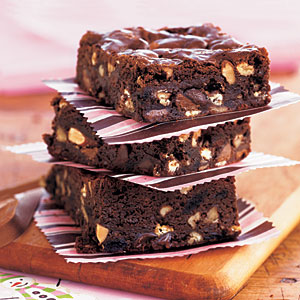
I just read Food and Loathing, – the great title attracted me when I was nearby looking for books about other psychological problems – and I have a tiny question that I’m really curious about. I noticed that on page 46 you said you made a toasted peanut butter and chocolate chip concoction and on page 233 you said you nibbled around the walnuts in a brownie because you’re deathly allergic to nuts.

So I’m just wondering: did you develop the allergy in-between those two incidents or was one of them a matter of “poetic license”.

Thanks, NAME WITHHELD


We Decided That We Would have a Soda

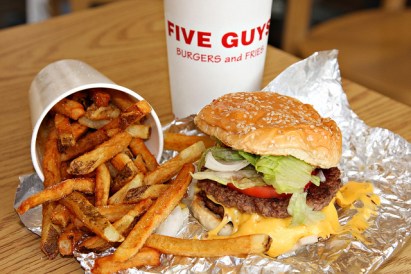
What’s better than Prozac, Five Guys, a hand job, and finding forty dollars in your pocket?

five-guys

BOOKLIST starred Review

Growing up, Lerner (Food and Loathing, 2003) has memories of her mother’s bridge club, dressed in sweater sets, arriving on Mondays for lunch and a game. The five ladies, now in their eighties, are all Jewish, attended college, were full-time homemakers, and have played together for 50 years. Whe circumstances send Lerner back to her childhood home, she returns to all the unresolved issues between her and her mother. Lerner decides that by learning to play bridge and getting to know the club members better, she may be able to finally understand her mother (who still pushes her buttons). As she interviews the ladies, Lerner, used to the open sharing of her generation, is at first stymied by the bridge ladies’ reticence. But as she delves into their pasts (while honing her bridge game), she begins to reluctantly admire their generations’ strict code of conduct and steadfast bravery. Lerner is unfailingly honest in her comments, and her insights into mother-daughter relationship are poignant. Bridge aficionados or not, readers will be drawn into this touching tribute to a generation of women who had seemingly had their priorities straight and their lives in control, at a price. Lerner’s portraits may well help grown daughters facing similar struggles gain some perspective.— Candace Smith

Ain’t These Tears in These Eyes Telling You


103_002

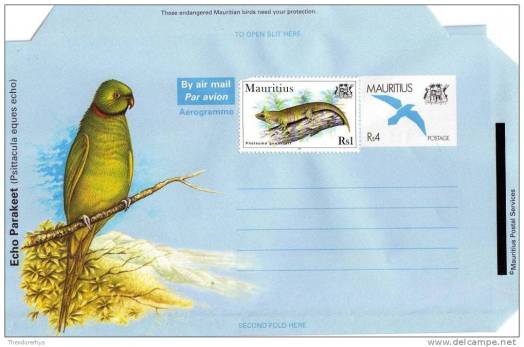
My mother gave me a four inch thick packet of aerograms tied with a ratty shoelace. They were all written by me when I was in London during a junior year abroad. I have no recollection of writing a single letter let alone this cache. My mother says she has read them all and she was “near tears.” Near tears for my mother is sobbing uncontrollably for most people. I read one letter and was sobbing uncontrollably. It was a pale blue window into a very unhappy girl pretending to be a happy girl.

Who were you?

Can You Tell a Green Field From a Cold Steel Rail

My client and friend Eli Gottlieb has created an unforgettable character in his latest novel, Best Boy. Todd is an autistic man who has been institutionalized for most of his life. He’s loosely based on Eli’s brother and this is a short film about them. It’s one of those rare occasions where you can see the life/art continuum.

9781631490477_best_boy_012815

New York Times Editor’s Choice
People Magazine Pick of the Week
A Washington Post Notable Book
Library Journal Top Ten Books of 2015
BookPage Top Five Books of 2015

“Gottlieb merits praise for both the endearing eloquence of Todd’s voice and a deeply sympathetic parable that speaks to a time when rising autism rates and long-lived elders force many to weigh tough options.” – Kirkus, Starred Review

 “Raw and beautiful… BEST BOY is an eventful novel with a mesmerizingly rhythmic narration…What rises and shines from the page is Todd Aaron, a hero of such singular character and clear spirit that you will follow him anywhere. You won’t just root for him, you will fight and push and pray for him to wrest control of his future. You will read this book in one sitting or maybe two, and, I promise, you will miss this man deeply when you are done.” – Ann Bauer, The Washington Post “

Amid the flood of books about autism in childhood comes this gripping novel about the fresher territory of autism in midlife. It is written with élan, wit, and great empathy, and it limns in fiction the crisis our nation faces in real life as we try to construct viable supports for this burgeoning population.” – Andrew Solomon

“This astonishing story of goodness and resilience, about the adventure of loving and being loved, is a marvel of Wordsworthian perception, inviting us to behold existence through unclouded eyes, with an unguarded heart, as though we and the world had never grown apart. The music of consciousness playing in these pages will stay with you long after you’ve finished reading. A literary experience of piercing, invigorating, profound humanity. A homecoming that restores the mind and soul.” – Walter Kirn

“In the way of all things happening for a reason, Gottlieb’s marvelous novel has happened so that readers may be in awe of all the universe’s creations.” – Booklist, Starred Review

“BEST BOY is a remarkable achievement – an intimate and convincing portrayal of what the world looks like from inside the mind of a mentally handicapped but unusually sensitive, observant, and decent man.” – Alison Lurie

“Gottlieb records the utterly confounding and inevitable plunge into adulthood with bold clarity. He depicts the spoken and unspoken language of cruelty and love in a family with confidence and poetry. But he is at his very best in the freshness of his imagery, creating a world so vivid and memorable the reader finds all five senses delightfully engaged in experiencing it.”– Publishers Weekly, Starred Review