• Forest for the Trees
  • THE FOREST FOR THE TREES is about writing, publishing and what makes writers tick. This blog is dedicated to the self loathing that afflicts most writers. A community of like-minded malcontents gather here. I post less frequently now, but hopefully with as much vitriol. Please join in! Gluttons for punishment can scroll through the archives.

    If I’ve learned one thing about writers, it’s this: we really are all alone. Thanks for reading. Love, Betsy

Everybody Knows This is Nowhere

I’m having one of those days when I really want to be Michelle Williams.

Instead, meeting with a BDP, another prospective client, a client whose publisher has turned down his option book, a party at Crown for their new publisher. You know, a see and be seen. Of course, I’m having a bad hair day, which is pretty much every day. There’s really nothing like a publishing party to make you wish for a swift and painless end. I thought about wearing a suit but decided to go with the jeans and black shirt black jacket look. Right?

Just Published

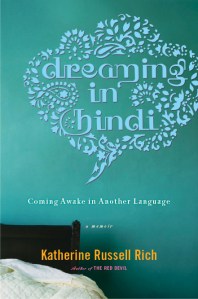
Rich.Dreaming“Dreaming in Hindi is a funny, deeply humane journey of words that invites the reader to awaken to new sounds and sensibilities in India. Katherine Russell Rich reflects our own history and culture back at us through the lens of a storied culture. What a gorgeous, intelligent book! –Jayne Anne Phillips, author of  Lark and Termite
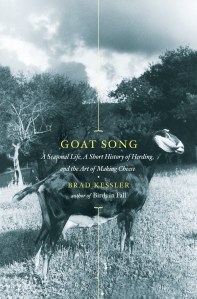


Kessler_GoatSong“Beautifully written in Brad Kessler’s poetic, reverent voice, “Goat Song” shows us that when we take care of the land, animals, and each other to feed ourselves, we’re participating in an ancient rite that imbues our lives with meaning and nourishes our bodies and our souls.”  — Alice Waters, author of The Art of Simple Food

FAQ: If I Want to Write, Should I Get a Publishing Job?

 N.G. asks a very good question:  if I want to be a writer should I try to get a job in publishing, or avoid the business altogether?

This is a can of worms. Lots of people who go into publishing have the desire to write. Some do. Many don’t. Would they have realized their writing ambitions had they stayed away? We’ll never know.

Also, what branch  of publishing? Clearly, editing is the closest to the writing process, but does that work sap your creative juices most? In my case, I didn’t write for the first twelve years I worked in publishing as I climbed my way up the editorial ladder. I even stopped keeping my diary. It wasn’t a conscious decision; I became completely wrapped up in my authors’ lives and work.

The time factor:  editoral work is extremely time consuming, most reading and editing is done on nights and weekends. It’s almost impossible to write. Also, if you’re struggling with your own work and what you want write, it’s “easy” to get absorbed in someone else’s work and avoid your own. I’ve seen some editors and other publishing people become competitive with their authors. This is the sure sign of a frustrated writer.

One reason to go into publishing is to make connections and see how it’s done. I would have never sold my first book had I not known agents and reviewed hundreds of non-fiction proposals to see how to put them together. 

Ultimately, I think it’s probably better to do something that leaves you more time to write. And, more important, read.  The day you step into a publishing cubicle, your life is consumed with reading a lot of sub-standard material as you comb through stacks of submissions.

When I was an assistant editor at Ballantine, my boss handed off a how-to book for me to edit. The woman barely knew how to string a sentence together. We must have gone through eight drafts and the Dingleberry still didn’t get it. In the end, all that work raised a D- manuscript to a C- book. All editors have zillions of stories like this — it comes with the territory.  But the whole time working with her I remember thinking, I will have read eight drafts of this piece of crap and go to my grave having never read War and Peace.

You know how they say you have to play tennis with someone above your level to improve? I think the same is true with writing. You could be reading slush or you could be reading Tolstoy.


Shape Shifters

In the past few days, before the book fair even starts, we have met with publishers, editors, and agents from China, Japan, England, Germany, France, Italy, Netherlands, Spain and Los Angeles. Everyone is looking for one thing: the next Twilight. Makes me wonder, if everyone is looking for the same thing, why can’t they find it?

I have always counseled writers not to look at the bestseller lists for inspiration. I’ve even been condescending to those copycats who ride on the coat tails of others. But it is undeniable that when a book hits big, lots of knock offs follow, some of them extremely good.

Since I’ve been in publishing, people have been searching for the next Perfect Storm which kicked off a renewed interest in outdoor adventure. (I prefer indoor adventure, particularly parlor and bed room adventure.) The next Seabiscuit, the next Angela’s Ashes, the next Midnight in the Garden of Good and Evil, the next Harry Potter, Tipping Point, Marley, Tuesdays with Morrie, Eat me, Pray, Love, etc. 

I would still prefer to be the agent whose client kicked off the trend. I would still prefer to find my writers under rocks, beside streams, in locked wards, and lost in the stacks of a lonely library. I just would. I’m a stubborn son of a bitch. That said, if you have a werewolf manuscript in a drawer, or can whip up one before the next big thing hits, send it to me. Now.

Gravy

Just got my royalty statement from Penguin. It comes in a large envelope with a window pane. (Cellophane not to be confused with late 70’s acid.)  I still find it miraculous that after nine years the book is still earning a royalty. Not a fortune, mind you. But enough to buy a bracelet and a few qualudes, as a good friend once put it.


I want to thank everyone who bought a copy this reporting season. And if you send me your address, I’ll send you an original, authentic pencil from the historic and highly imitated marketing campaign. I know, this blog never stops giving.

At a Theater Near You

JUST PUBLISHED:

letters of wcw0001

 Three hundred letters from William Carlos Williams to his younger brother with whom he confides his desire to become a great artist. Edited by Andrew Krivak, poet, scholar, novelist and author of A Long Retreat.

ON THE RADIO:

Unbelievable_jacket


Stacy Horn on the Faith Middleton Showhttp://tinyurl.com/StacyFaith


FIVE WEEKS ON THE NYT BESTSELLER LIST:Columbine-1

http://vodpod.com/watch/1546705-maddow-columbine-facts-vs-myths

“ For any reader who wants to understand the complicated nature of evil, this book is a masterpiece.” — Seattle Times

 Also this week:

I  tried to wear my hair up with a clip. No one said anything so I’m assuming it was a disaster.

We threw a little party for our superb assistant Yishai on the occasion of his wedding next week.

We are booked solid for meetings with foreign publishers and film types who are coming to New York for the Book Expo

Someone who will go unnamed at the William Morris Agency is not returning my call. Unexfuckingceptable.


FAQ: How Long Has This Been Going On?

One of my devoted readers writes:

“I have an agent, but I don’t want to seem like a pest.  Can you say something about how long it takes (on average) for publishers to make a decision once they have requested a book proposal?  I realize there’s no pat answer–I’m just trying to get a feel for how the process works.”

Dear Devoted:

If  your project is submitted by a reputable agent, you should get a response within three to four weeks. There are always exceptions. Books can be pre-empted overnight. They can be bought within days.  Sometimes the process can drag on for a month or more, especially if your agent is staggering your submission. Long novels can take more time than non-fiction proposals, though The Historian was snapped up overnight.

Many agree that it’s all about the juice, your agent’s and the project’s.  But there are also  stories of bestsellers coming from unlikely sources. Dan Brown’s agent is best known for representing Drawing on the Left Side of the Brain (or is it the right?) and books about psychology and women’s issues. She is one of the loveliest agents in the business, but not someone you’d necessarily expect to see a thriller from.  I wonder which side of the brain is used for counting dollars.

Bottom line, why are you afraid of appearing like a pest to your agent? He or she is working on your behalf. He or she should walk you through the process and answer these questions. And keep you apprised of rejections as they come in, possibly set up meetings for you with interested parties, and generally keep you informed of the submission process.

The Woodhouse Way

Continuing to pack for the move, well, at this stage, mostly throwing out crap, I came across the proposal for The Forest for the Trees.

It was  sold with the title:

NO BAD WRITERS: An Editor’s Handbook for Procrastinators, Self-Flagellators, Manquees, Masochists, Imposters, and Dreamers — In Other Words, Writers of all Kinds — With Some Tips About the Writing Life and Getting Published.

Moving right along.

I originally got the idea for the book when, as a young assistant editor,  I had to write a tip sheet (basically all the relevant information about a book boiled down to one page that pulishers use for their pre-publication meetings. It usually includes a keynote about the book, comparison titles, ISBN, sales track, brief description or key points, blurbs, etc.) for a dog training book called No Bad Dogs.

The author Barbara Woodhouse believed there were no bad dogs, only bad owners. She got into the psychology of dogs and she had chapters with names like: Nervous Dogs, Dogs with Phobias, Dirty Dogs, Living with Mentally Unstable Dogs, and Dogs that Hate Men or Women.

Though I didn’t write the proposal for another ten years, that’s where I got the idea to write about writers’ personalities.

Karen Blixen Coffee Garden Restaurant & Cottages

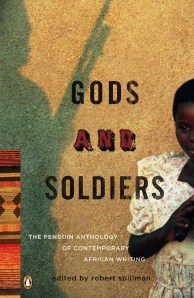
gods-and-soldiers-cover

Tuesday, May 12, 6 pm reading with Patrice Nganang and others
HUE-MAN

2319 Frederick Douglass Blvd
Between 124th and 125th Streets
New York, NY 10027
http://www.hueman-bookstore.com

Tuesday, July 7, 7:30 pm reading
 POWELL’S

1005 W. Burnside
Portland, OR
http://www.powells.com


If you have a chance, treat yourself to a night of superb African writing and celebrate the publication of Rob Spillman’s just published anthology, Gods and Soldiers.  And check this out, too.

Twelve-Step Program

Please read this article by Jon Karp, Publisher of the imprint Twelve, if you want some really cogent thoughts on the state of publishing. And you won’t need to turn your life over to a higher power except your keyboard.

http://www.publishersweekly.com/article/CA6652430.html